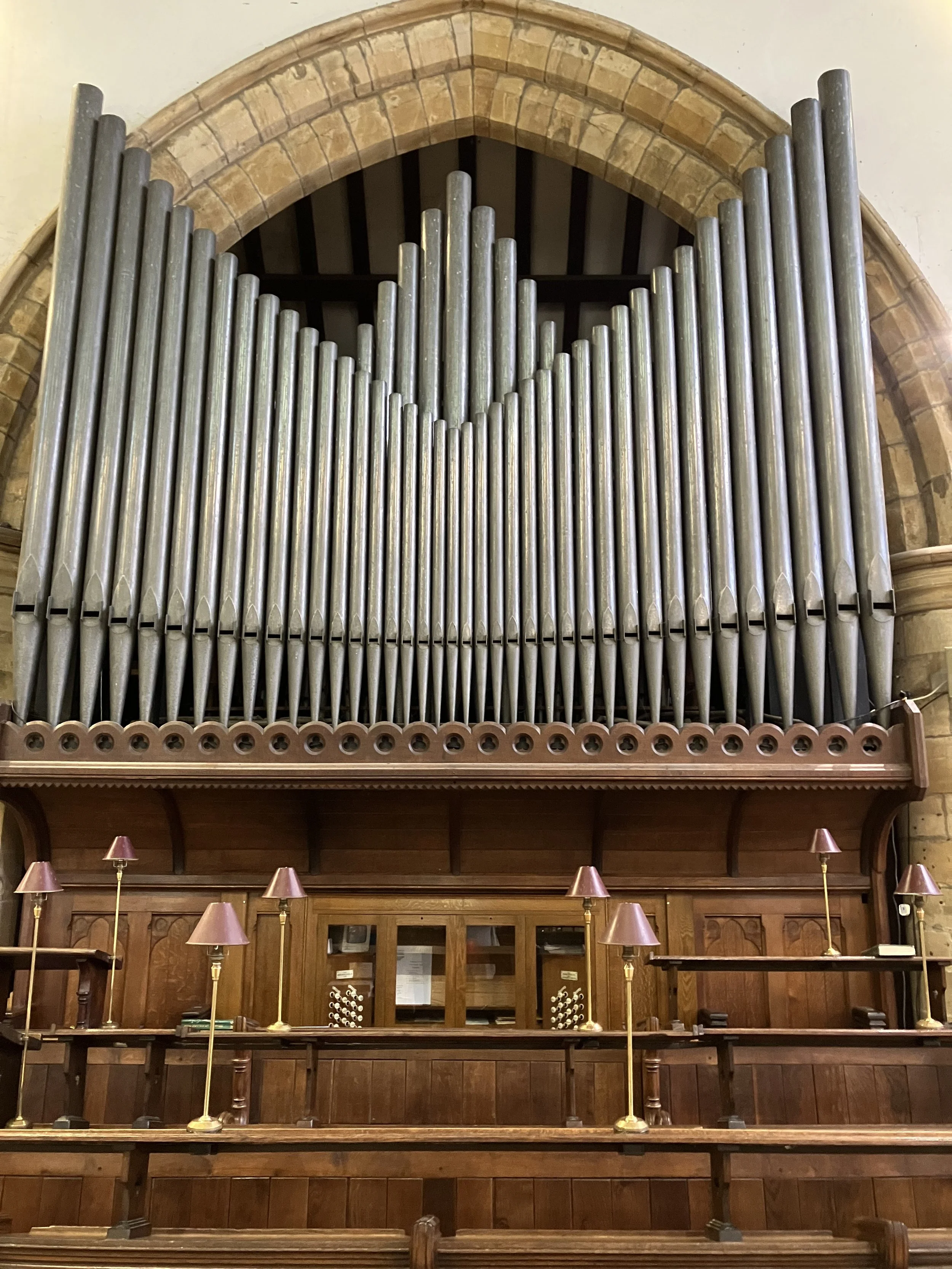
The Organ
Father Willis and His Legacy
Henry “Father” Willis was the most celebrated English organ builder of the Victorian era, renowned for the tonal beauty and reliability of his instruments. His workshop supplied major churches and concert halls across Britain, including St Paul’s Cathedral, the Royal Albert Hall and Winchester Cathedral, and his name became a byword for quality.
The organ at St Mary’s, Horsham, was built by Willis in 1865, at a time when the town was expanding rapidly with the arrival of the railway. It is recognised as a fine Willis instrument, making it an important survivor in the national story of English organ building.
Evolution of St Mary’s Organ
Parish records indicate that much of the original funding for the organ came from Henry Padwick, a controversial local financier, speculator and racehorse owner who lived at the Causeway Manor House in Horsham. His patronage allowed the parish to acquire an instrument of a quality more often associated with cathedrals and major town churches.
The organ has been sensitively adapted over time: it was rebuilt by Norman & Beard in 1909, later updated with electro pneumatic actions in the mid 20th century, and underwent significant restoration around the turn of the millennium. Despite these interventions, the core Willis pipework and musical character remain remarkably intact, giving the instrument its distinctive range of sounds, from gentle flutes, to warm choruses, and fiery trumpets and horns.
How the Organ Works
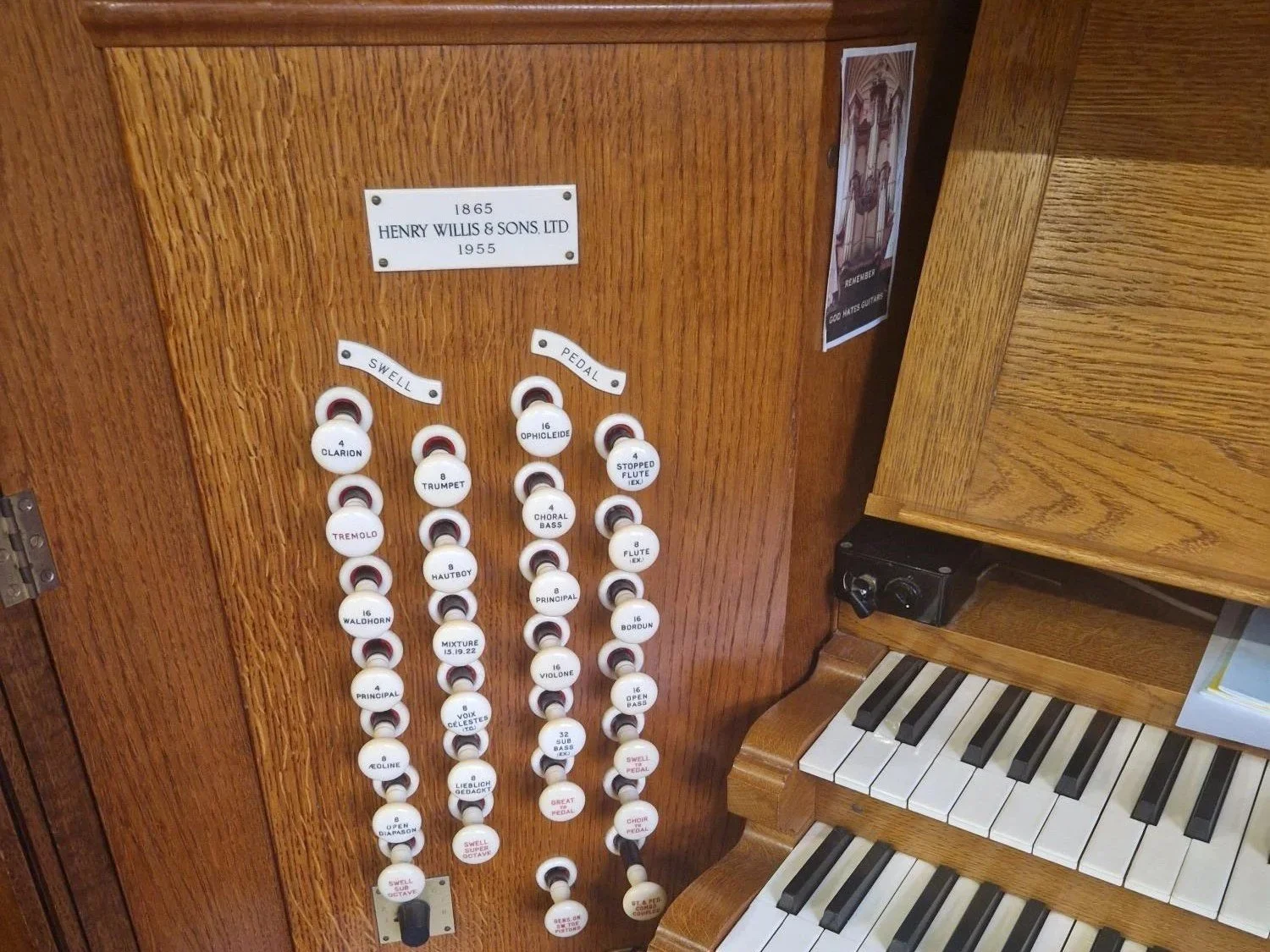
A pipe organ is essentially a sophisticated wind machine: pressurised air is channelled through thousands of pipes, each designed to produce a particular note and colour. At St Mary’s, ranks of slender metal pipes create string like tones, while wooden pipes provide flute like sounds, and reed pipes imitate brass instruments.
The organist controls these colours using stops on the console, combining them across three manuals and pedals to shape music ranging from the quietest prayer to a full throated hymn. Underneath the keys, a complex network of mechanical, pneumatic and electrical linkages translates each touch into movement of tiny valves, allowing air into the correct pipes in a fraction of a second.
Why it Matters
A Living Piece of Victorian Heritage
The Willis organ is not a museum piece: it is a working instrument that continues to lead worship, accompany choirs and support community events week by week. Its voice has accompanied baptisms, weddings, funerals and civic services for generations, weaving itself into the shared memory of Horsham.
Because it remains close to Willis’s original vision, the organ is also of wider historical interest, offering musicians and historians a rare chance to hear 19th century Anglican music on the kind of instrument for which it was written. Preserving this sound world is a key part of safeguarding the cultural heritage of both the church and the town.
The Organ and Victorian Technology
Willis was a pioneer in applying new technologies to organ building, using pneumatic assistance and later electro pneumatic systems to make larger, more flexible instruments playable. These innovations were showcased at the Great Exhibition of 1851, where his work drew national attention and helped establish his reputation.
The St Mary’s organ embodies this spirit of Victorian innovation, translating the same engineering confidence that produced railway stations, iron bridges and the Crystal Palace into sound. Restoring the organ continues that story, demonstrating how heritage engineering can still serve contemporary communities.
Links with the Local Community
St Mary’s stands at the historic heart of Horsham, and its organ has long played a role far beyond Sunday services. Local Choral Societies' concerts, civic occasions, the annual Service of Remembrance, school services and charity events all depend on the instrument’s versatility and presence.
The Organ Fund aims not only to repair a mechanism but to strengthen these community links: supporting local musicians, offering educational projects, and providing a first encounter with live music for young people in the town. We currently have five young people from Horsham who use the organ for practice, and two adults. Our Organ Scholar is a pupil of Bohunt School. And of course, the organ is a vital support for our main and junior church choirs, which provide a basic musical training for 15 children.